Travelling with gadgets: what’s covered and what isn’t
 By
loveit coverit
By
loveit coverit
Published
4th February 2026
loveit? shareit!
By
loveit coverit 
If you travel with a phone, a laptop, a camera (and about 47 chargers you swear you need), it’s worth knowing this: travel insurance doesn’t always treat gadgets the same way it treats clothes and toiletries. That’s where gadget cover on travel insurance can make a big difference, as long as you understand the limits and the “don’t do this” list.
Travelling with tech? Check your gadget cover limits before you go.
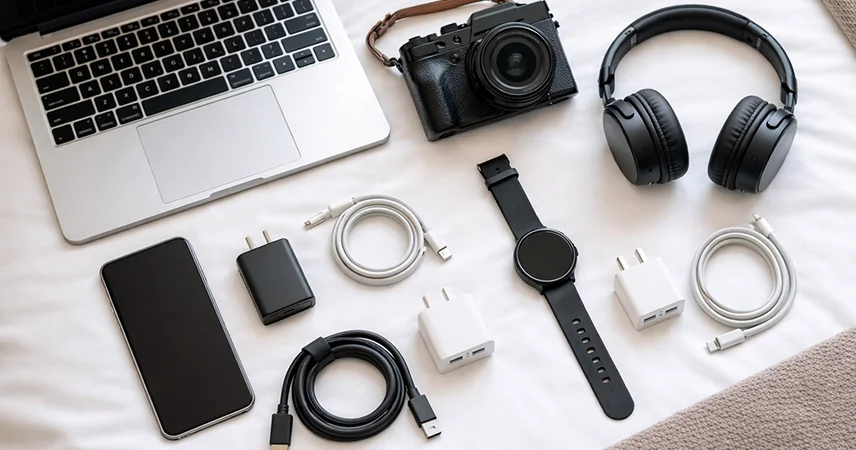
Travel gadgets laid out including phone, laptop, camera, smartwatch and headphones
For most of us, “gadget” basically means “the stuff that would ruin my trip if it vanished”. In policy terms, gadget cover usually applies to portable electronic items you take with you, such as:
This guide is here to explain the practical bits. If you want the full policy details and limits, check your documents and the gadget cover page linked above.
If it’s electronic, portable, and you’d be deeply annoyed to replace it abroad, it probably sits in the gadget bucket. The key thing to remember is that gadget cover is often something you add on, so it’s worth checking your documents before you travel.
Here’s the simplest way to think about it: gadget cover is generally built for sudden, specific incidents (a theft, a drop, a cracked screen). It’s less forgiving when the situation looks avoidable, vague, or hard to evidence.
Most gadget cover focuses on three areas:
Also worth a quick reality check: cover isn’t usually a blank cheque. There may be repair first, then replacement if repair isn’t possible, and limits apply.
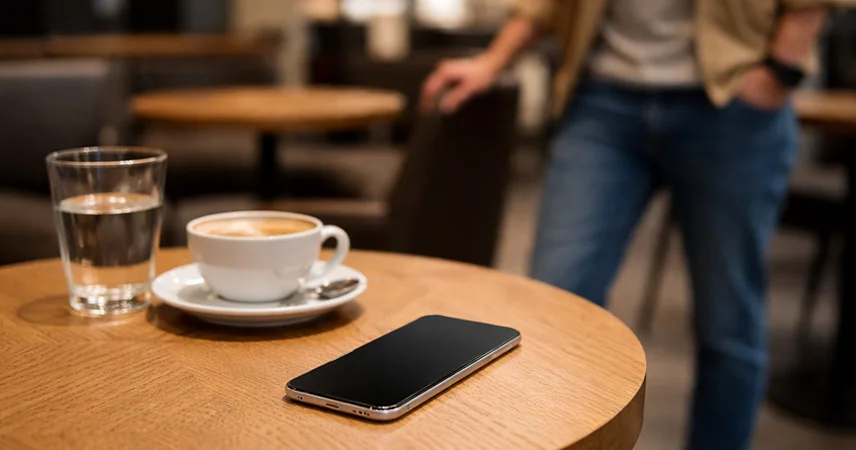
Mobile phone left unattended on a café table while travelling
If there’s one phrase that decides a lot of gadget claims, it’s “unattended”. In plain terms, that means you weren’t in full view of the item and not in a position to stop someone interfering with it.
This matters because many policies exclude theft or loss when a gadget is left unattended, for example:
Most policies also expect reasonable care. That means you’re expected to take sensible precautions to prevent loss, damage or theft. If the situation looks careless, it can create problems for a claim.
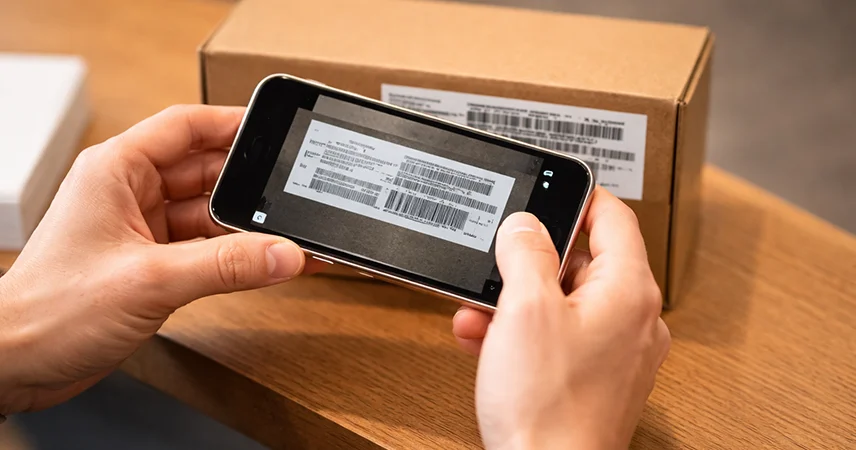
Traveller checking proof of ownership details for a phone before travelling
This is the bit that matters most for laptop travel insurance and camera travel insurance, especially if you’re travelling with expensive tech.
Before you assume “I’ve got gadget cover, I’m fine”, check three things:
If you’re travelling with expensive tech, boring wins: keep proof of ownership somewhere accessible (email/cloud), and note down key identifiers like serial numbers or IMEI (for phones).
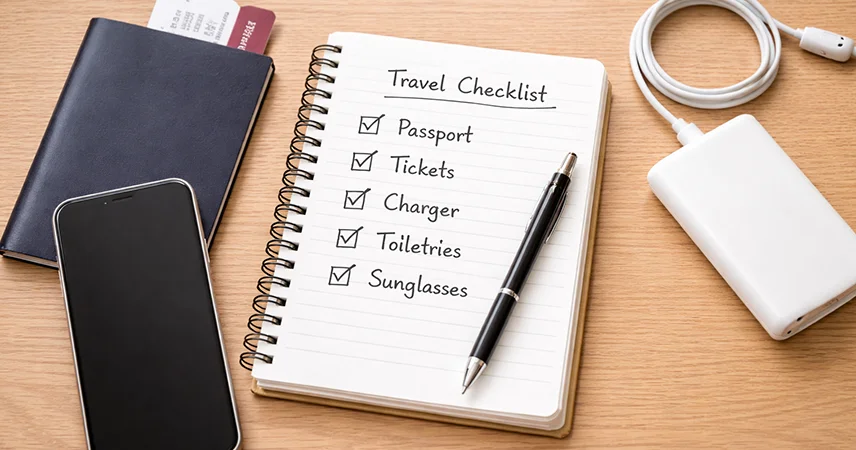
Travel checklist next to a passport, phone and power bank
A quick run-through that can save you a lot of pain later:
If you want a clearer view of what’s included, what’s excluded, and how limits typically work, take a look at gadget cover options for travel before you go.

Traveller making a call after their phone is lost or stolen abroad
If your gadget is stolen, lost or damaged abroad, speed and evidence matter. Here’s what to do first:
And if you’re still deciding the right policy shape for your trip, start with the basics of travel insurance, then choose whether single trip cover or annual cover makes more sense for how often you travel.
 Travelling as a couple but not always together: what to check
 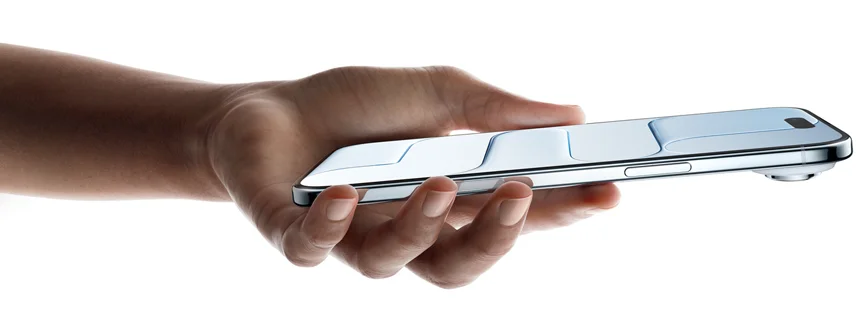 Do You Need iPhone Air Insurance?
 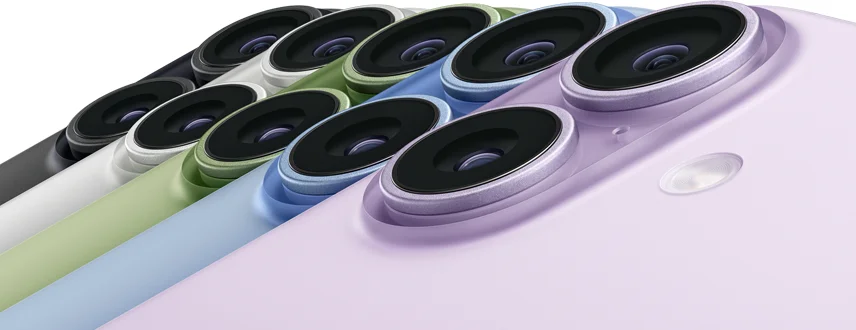 iPhone 17 Overview The Smarter Upgrade in 2025
  Waddle on Sea: Supporting Havens Hospices, One Penguin at a Time
  Nothing Phone (3) Leaks Round-up